


Residential Landscape Maintenance for HOAs: 2026 Guide
Table of Contents
What Residential Landscape Maintenance for HOAs Actually Covers
The Core Maintenance Scope: Lawns, Beds, Trees, and Hardscape
Who Is Responsible: HOA, Residents, or the Landscape Vendor?
Building an HOA Landscape Maintenance Plan That Holds Up
Measurable Standards: What 'Mowed and Maintained' Should Mean
The HOA Landscaping Schedule: Weekly Service to Seasonal Cleanup
Annual Calendar for Common Areas and Zero-Lot-Line Communities
Adapting the Calendar to Your Climate and Turf Type
Zero-Lot-Line and Townhome Adjustments
HOA Landscape Maintenance Cost: What Drives Your Bid
The Cost Drivers That Actually Move the Number
Comparing Bids Without Getting Burned by the Lowest Number
Budgeting for the Year, Not Just the Month
Contract Length and Price Escalation
What Belongs in an HOA Landscaping Contract
Insurance, Licensing, and Risk Language to Verify
Water Conservation, IPM, and Storm Response: The Parts Most Boards Skip
Resident Communication, Complaints, and Responsibility Boundaries
Frequently Asked Questions
Last Updated: October 16, 2026
What Residential Landscape Maintenance for HOAs Actually Covers
Residential landscape maintenance for HOAs is the contracted care of shared lawns, beds, trees, and hardscape across a community's common areas. Boards struggle most with one question: who handles what.
Most boards assume "landscaping" means mowing. It means far more.

The Core Maintenance Scope: Lawns, Beds, Trees, and Hardscape
A complete program covers eight work areas. Miss one, and residents notice within a month.
Lawn care and turf: mowing, trimming, edging, and seasonal overseeding
Trees and shrubs: pruning, shaping, and removal of dead growth
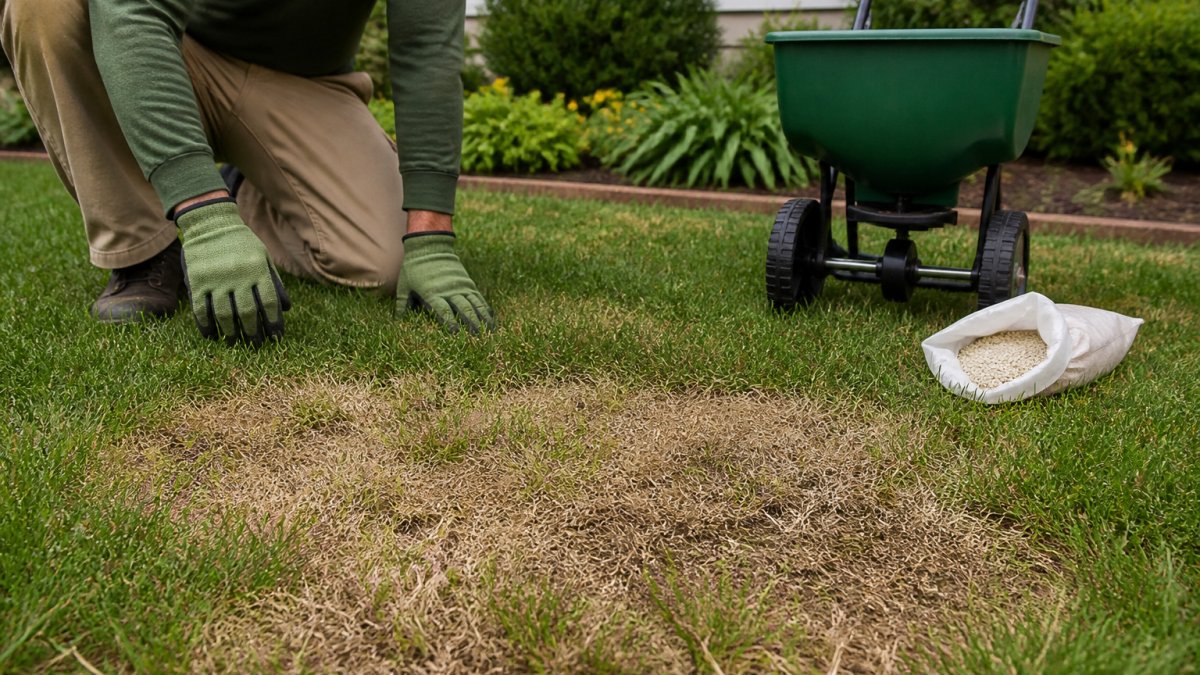
Weed control and fertilizing: scheduled treatments, not one-time sprays
The USDA Plant Hardiness Zone Map helps boards pick plant materials that survive local winters, which cuts replacement costs over time.
Who Is Responsible: HOA, Residents, or the Landscape Vendor?
Responsibility splits three ways, and vague contracts cause most disputes.
The HOA owns common areas, greenbelts, and shared outdoor spaces. Residents typically handle their own front yards where rules allow. The landscape vendor handles everything in the signed scope.
In zero-lot-line communities, boundaries blur fast. Write the split into the contract, not a verbal agreement.
Watch Out The most common mistake is assuming "common area" covers everything outside a front door. If the contract does not name a zone, the vendor will not maintain it, and the board eats the cost of a mid-year add-on.
Building an HOA Landscape Maintenance Plan That Holds Up
An HOA landscape maintenance plan is a written document that sets service frequency, measurable standards, and reporting duties. Without it, every visit becomes a judgment call.
Measurable Standards: What 'Mowed and Maintained' Should Mean
"Maintained" is not a standard. It is an opinion waiting to cause an argument.
Set numbers instead:
Task | Measurable Standard | Check Frequency |
Mowing | Turf kept at 3-4 inches | Weekly |
Edging | Clean line along all sidewalks | Weekly |
Mulch depth | 2-3 inches in all beds | Monthly |
Irrigation check | No broken heads or dry zones | Monthly |
Weed control | Beds 90% clear of visible weeds | Biweekly |
These targets give the board something to inspect. They also give the vendor a clear pass or fail.
The HOA Landscaping Schedule: Weekly Service to Seasonal Cleanup
A workable HOA landscaping schedule runs weekly during growing season and shifts to monthly or as-needed in winter. Frequency should follow plant growth, not a fixed calendar. The gap most boards fall into is treating the schedule as a single national template when turf type and hardiness zone drive every date on it.
Annual Calendar for Common Areas and Zero-Lot-Line Communities
Here is the seasonal rhythm for most communities, with the tasks that anchor each window:
Late winter (February-March): dormant pruning of trees and shrubs, bed cleanup, soil test, irrigation controller inspection before startup
Early spring (March-April): irrigation startup and head adjustment, first fertilizer application, pre-emergent weed control, mulch refresh to 2-3 inches, overseeding of thin turf
Late spring (May-June): weekly mowing begins, edging along all sidewalks, spot weed control, first irrigation audit
Summer (July-August): weekly mowing at the higher end of the height range to shade soil, irrigation checks every two weeks, storm debris response, heat-stress monitoring on beds
Early fall (September-October): aeration and overseeding of cool-season turf, leaf removal begins, second fertilizer round, irrigation schedule reduced
Late fall (November): final mowing, irrigation shutdown and blowout, leaf removal completed, bed weed cleanup
Winter (December-January): dormant pruning, storm prep, equipment service, contract review for the coming year
Adapting the Calendar to Your Climate and Turf Type
Climate shifts this calendar, and so does turf species. The USDA Plant Hardiness Zone Map is the starting point, a board in Zone 5 will shut irrigation down in October while a board in Zone 9 may run it year-round at reduced frequency.
Warm-season grasses such as Bermuda and St. Augustine green up later and go dormant after the first frost; their fertilizer window runs spring through late summer.
A common pattern is that boards copy a neighboring community's calendar without checking whether the turf species match. The result is fertilizer applied during dormancy, irrigation running through a freeze, or mowing height set for the wrong grass.
Pro Tip Ask your vendor to write the calendar with specific month ranges for your zone and turf type, not generic seasons. A calendar that says "spring" instead of "March 15-April 30" gives the crew room to drift, and drift is how beds end up weedy by June.
Zero-Lot-Line and Townhome Adjustments
In zero-lot-line communities, the schedule has to account for shared walls, narrow greenbelts, and limited equipment access. Mowing crews may need smaller decks to fit between buildings, and edging along shared pathways takes longer per linear foot than open common area. Build those constraints into the frequency estimate, or the vendor will quietly skip the tight zones to stay on schedule.
HOA Landscape Maintenance Cost: What Drives Your Bid
HOA landscape maintenance cost depends on property size, service frequency, plant density, irrigation complexity, and site access. Two communities of the same acreage can see very different bids. The reason is that acreage is the least useful cost driver, a board that budgets by acre alone will either overpay or under-scope.
The Cost Drivers That Actually Move the Number
When a vendor prices a community, these variables do the heavy lifting:
Turf acreage vs. total acreage: mowing is priced per turf acre, not per property acre. A community that is 40% beds and hardscape costs less to mow than one that is 80% turf.
Service frequency: weekly mowing during a 30-week growing season is roughly 30 visits; biweekly is 15. Frequency is the single largest swing factor in the monthly line.
Plant density and bed square footage: more shrubs mean more pruning hours per visit. Beds priced by square foot, not by count.
A practical budgeting approach is to ask each vendor to price the same written scope with these variables itemized, then compare the per-unit rates, cost per turf acre per visit, cost per bed square foot per month, cost per irrigation zone per inspection. Unit rates expose whether a bid is low because the scope is thin or because the vendor is genuinely efficient.
Comparing Bids Without Getting Burned by the Lowest Number
The lowest bid usually trims something. Find out what before you sign.
Scope gaps: fewer visits, no mulch, no storm response
Insurance gaps: no proof of liability coverage
Crew size: one crew for a property that needs three
Ask each vendor to price the same written scope. Then compare line by line. A bid comparison worksheet should have one column per vendor and one row per scope item, with a column for unit rate and a column for annual total. Any row where one vendor is dramatically lower than the others is a row to question, not a row to celebrate.
Watch Out A bid that is 30% below the others is almost never a better deal. It usually means the vendor plans to make up the difference through change orders, extra charges for work the board assumed was included. Read the exclusions page before the price page.
Budgeting for the Year, Not Just the Month
Monthly service is only part of the annual spend. Boards should budget separately for:
Recurring monthly service (mowing, edging, bed care, irrigation checks)
Seasonal projects (mulch refresh, aeration, overseeding, spring and fall cleanup)
Irrigation repairs (broken heads, valve replacements, controller issues)
A common pattern is that boards approve a monthly contract and then get surprised by a $4,000 mulch invoice in April and a $2,500 irrigation repair in July. Splitting the budget into recurring and project categories makes those costs visible before they hit.
Pro Tip Ask for the bid broken into monthly service, seasonal projects, and emergency work. Vendors who quote one lump sum often hide the cheapest line items, and boards lose the ability to cut or add services later.
Contract Length and Price Escalation
Most HOA landscape contracts run one to three years. Longer terms often lock in a lower monthly rate but reduce the board's leverage if service slips. Shorter terms give the board an exit but expose it to annual price increases.
Look for the escalation clause. A contract that allows the vendor to raise prices annually by an unspecified amount is not a fixed-price contract.
What Belongs in an HOA Landscaping Contract
A solid HOA landscaping contract names the scope, the schedule, the standards, and the exit terms. Everything else is negotiation.
Insurance, Licensing, and Risk Language to Verify
Before signing, confirm these items in writing:
Active state contractor license number
General liability insurance certificate
Workers' compensation coverage
Verify licensing through your state contractor licensing board before work starts.
Water Conservation, IPM, and Storm Response: The Parts Most Boards Skip
Water conservation and integrated pest management (IPM) are the two areas boards cut first, and regret most. Both save money over a full year.
Water-saving steps that work:
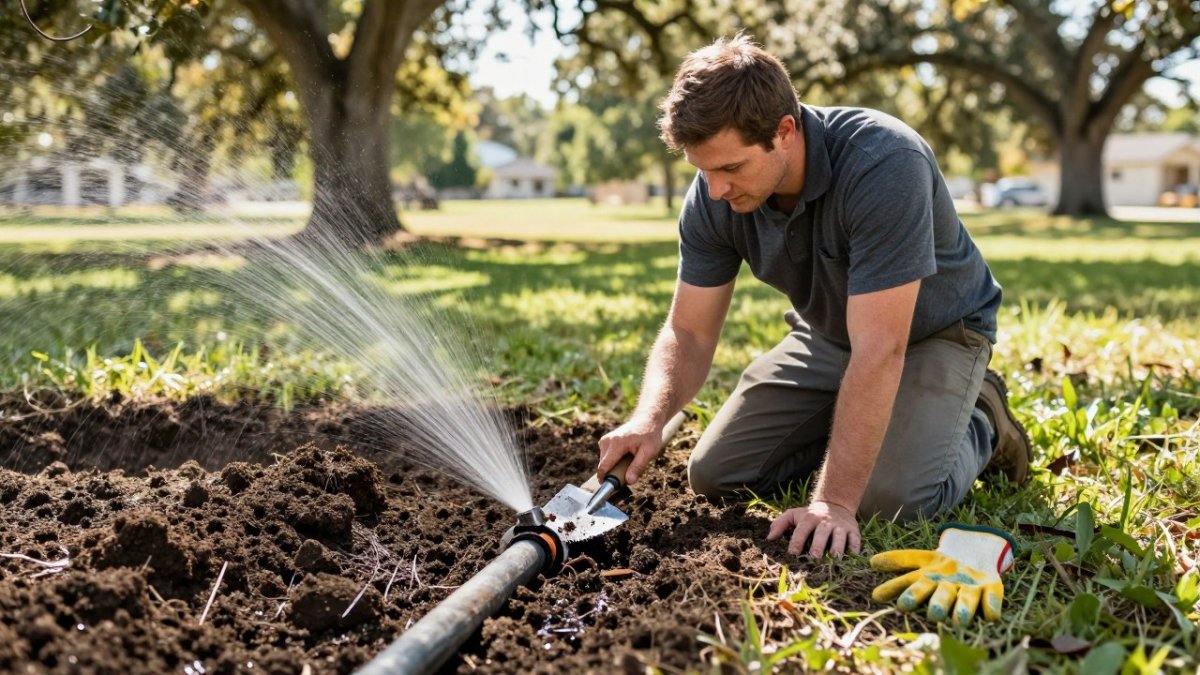
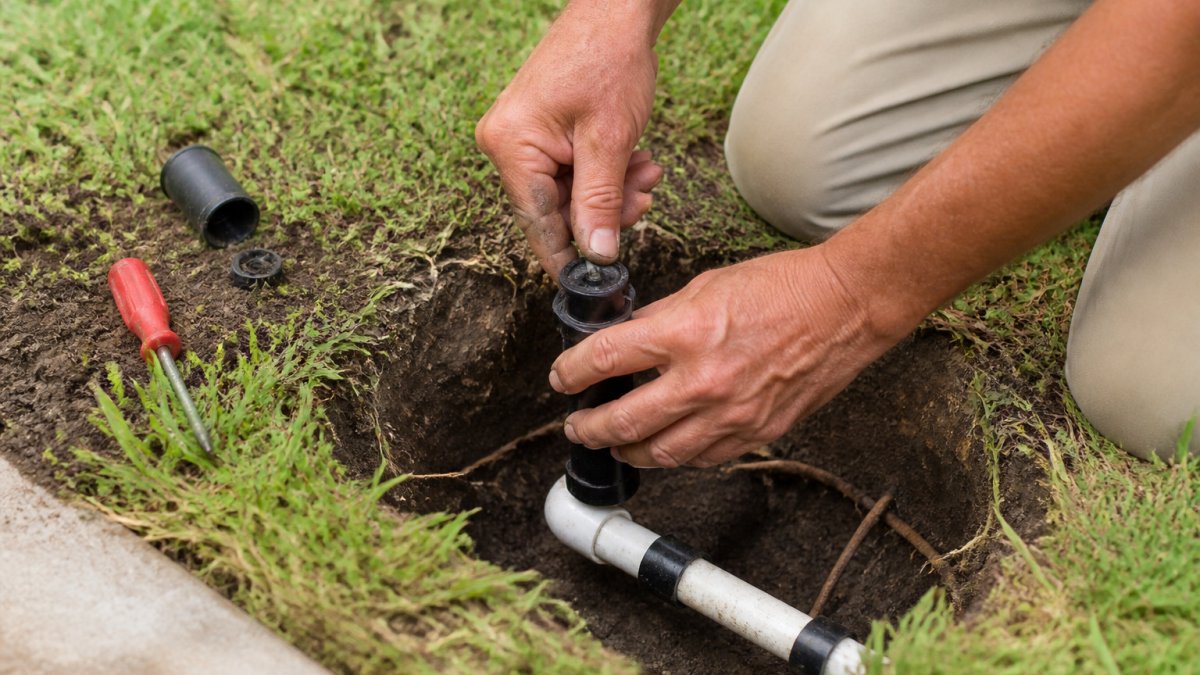
Fix leaks and broken heads within days, not months
Water early morning to cut evaporation loss
Swap spray heads for drip lines in beds
For pest control, IPM means treating the cause, not just the bug. The EPA integrated pest management principles outline a four-step approach: set action thresholds, monitor, prevent, and control.
Storm response belongs in the contract too. Downed limbs block pathways and create liability. Name who clears debris and how fast.
Resident Communication, Complaints, and Responsibility Boundaries
Clear communication prevents most complaints before they reach the board. Set a simple process.
Publish the maintenance schedule each season
Give residents one contact for landscape issues
Log every complaint with a date and location
Key Takeaway Boards that publish a one-page service calendar and a single complaint contact field far fewer calls. Residents stop guessing who to call, and the vendor stops fielding requests outside scope.
Talgarden handles design, sprinkler repair, sod installation, and hardscaping under one team, so boards are not stuck coordinating between contractors. Free estimates and competitive pricing make it easy to compare scope before you commit.
Frequently Asked Questions
What does HOA grounds maintenance typically cover?
Standard HOA grounds maintenance covers mowing, edging along sidewalks and pathways, shrub trimming, tree pruning, weed control, fertilizing, mulch refresh in landscape beds, irrigation checks, and seasonal cleanup. It applies to common areas, shared outdoor spaces, and entryways, not to the inside of a resident's fenced yard unless the governing documents say otherwise. Boards should list every task in the HOA landscaping contract so there is no dispute about what weekly service includes.
How often should an HOA schedule landscape maintenance?
Most communities need weekly service during the growing season and biweekly or monthly visits in cooler months. The right HOA landscaping schedule depends on climate, plant materials, and how much turf you manage. A practical approach is to set frequency by season in writing, then adjust after the first year based on how the grounds actually respond. Build in extra visits for spring cleanup and fall leaf removal rather than assuming they are covered.
Who is responsible for maintaining common-area landscaping?
The HOA is generally responsible for common areas, shared outdoor spaces, and community appearance features such as entry monuments and greenbelts. Residents usually handle their own patios, fenced yards, and any landscaping defined as limited common elements in the governing documents. Clear responsibility boundaries prevent most complaints. Put the split in writing and share it with residents so they know what to expect and what to report.
How can an HOA manage landscaping costs and service quality at the same time?
Define service-level standards with measurable terms, such as edging depth, mulch coverage, or response time for irrigation repairs, then tie payment to those standards. Ask every bidder to price the same scope so you can compare apples to apples. Review the HOA landscape maintenance cost against actual results each quarter. If quality slips, the contract language gives you a documented path to correct it before you consider switching vendors.
Most boards inherit a landscape program that was never written down, which is why costs creep and standards slip. Talgarden builds clear scopes, measurable standards, and dependable service so your shared spaces stay healthy year-round. With expert sprinkler repair, sustainable design, and a team that handles projects from concept to completion, we take the coordination off your plate. Schedule your estimate today and get a plan built for your community.
Schedule your estimate today!
Comments