


7 Steps to Prevent Lawn Brown Patches
Quick Summary
To prevent brown patches, water your lawn early in the morning so blades dry during the day, mow high at 3 to 4 inches, and feed it slow-release nitrogen rather than too much. Confirm the cause first, since grubs, pet urine, and drought can look similar to brown patch disease.
Water about one inch per week, before 10 a.m., in one or two deep sessions.
Never remove more than one-third of the grass blade in a single mowing.
Choose slow-release nitrogen and avoid heavy feeding in hot, humid weather.
Aerate and dethatch once a year to fix compaction and thick thatch.
Start fungicide before the warm, humid window, not after rings appear.
Table of Contents
7 Steps to Prevent Lawn Brown Patches
Last Updated: November 2, 2026
How to Tell Brown Patch Disease From Other Lawn Problems
Brown patches are one of the most common lawn complaints in the United States, and they are also one of the most misdiagnosed. Brown patch disease is a fungal infection, but many other problems create the same ring-shaped or circular dead spots.
Brown patch disease is a fungal infection that kills grass in circular or irregular patches. It thrives in warm, humid weather, especially when grass stays wet overnight.

Before you treat anything, look closely at the pattern. Brown patch often shows a darker "smoke ring" border at the edge of the dead area, where the fungus is actively spreading into healthy grass. That border is most visible in the morning dew.
A Symptom-Led Diagnostic Path
Work through these questions in order. Stop at the first one that matches, because treating the wrong cause wastes money and can make the problem worse.
Does the turf lift like a rug? Cut a one-square-foot section at the edge of a patch and lift it. If it peels up easily and you find white, C-shaped grubs in the top inch of soil, the cause is grubs, not fungus. Brown patch does not sever roots.
Are the spots small, with a bright green or yellow-green halo? Pet urine burns a small dark center surrounded by a ring of lush growth from the nitrogen in the urine. These spots cluster along a pet's regular route and rarely exceed a few inches across.
Is the browning broad and uneven, worst on slopes and full-sun areas? That pattern points to drought or compacted soil. Push a screwdriver into the soil; if it resists, the root zone is compacted and water is running off rather than soaking in.
Are the patches round to irregular, with a dark border in morning dew, after a humid stretch? This is the classic brown patch signature. Confirm by checking whether the grass blades have lesions with tan centers and dark edges, and whether the damage appeared within days of warm nights and wet foliage.
Did the browning follow heavy fertilizer or a heat wave? Fertilizer burn shows scorched tips and a uniform pattern following the spreader, not circles.
Common Causes of Lawn Discoloration
Several problems can make a lawn look brown. The most common include:
Fungal disease: Brown patch and related diseases, often after humid nights
Drought or water stress: Broad browning, especially in full sun or slopes
Grubs and insects: Turf that lifts easily because roots are eaten
Pet urine: Small, dark spots with a bright green or yellow-green halo
Compacted soil and poor drainage: Thin turf and standing water near low spots
Excess fertilizer or heat burn: Scorched grass after heavy feeding in summer
Symptom | Most Likely Cause | First Check |
Ring-shaped patches with dark border | Brown patch disease | Night watering history |
Lawn lifts like a rug | Grubs | Count grubs in a soil cut |
Small spots with green halo | Pet urine | Location near pet routes |
Broad, uneven browning | Drought or compaction | Soil moisture below the surface |
Scorched tips in spreader pattern | Fertilizer burn | Recent feeding rate and timing |
Watch out: If you cannot separate disease from drought or grubs with these checks, do not apply fungicide as a guess. A wrong diagnosis often leads to repeat applications that select for resistant fungi and cost more than a professional assessment.
Step 1: Water Early in the Morning, Not at Night
Water your lawn in the early morning, ideally before 10 a.m. This lets the grass blades dry during the day. Evening or overnight watering keeps leaves wet for hours, which gives fungus the moisture it needs, so timing your watering is one of the simplest ways to prevent brown patches.
Aim for about one inch of water per week, delivered in one or two deep sessions rather than short daily sprinkles. Shallow, frequent watering keeps roots near the surface, where they dry out quickly.
Watch out: Automatic sprinkler timers often run overnight by default. Check the start times on your controller, since a single late cycle can keep blades wet through the night.
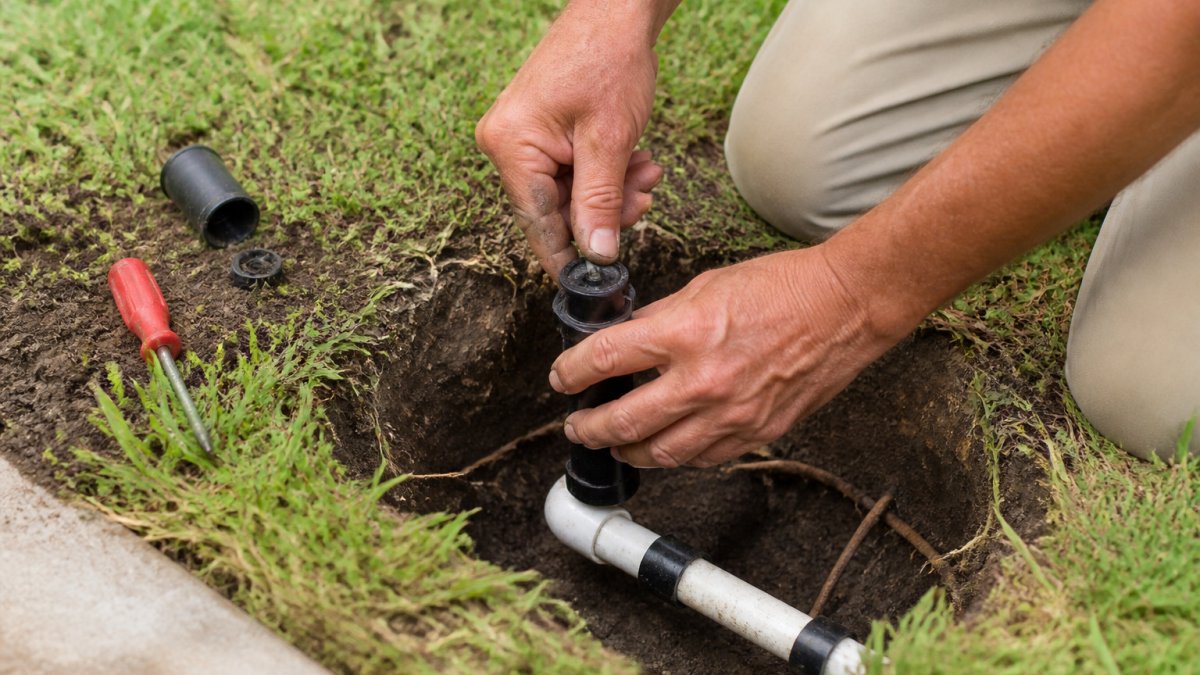
Sprinkler coverage also matters. Dry spots next to soggy ones usually mean a head is clogged, misaligned, or running at the wrong pressure. Talgarden offers expert sprinkler repair services that can correct coverage problems so water lands evenly.
Step 2: Mow at the Right Height and Keep Blades Sharp
Mow high. Most cool-season lawns look best at 3 to 4 inches, and taller grass shades the soil and holds moisture better. Never remove more than one-third of the grass blade in a single mowing.
Lakehouse Lawn Care
Keep your mower blades sharp. Dull blades tear grass and leave ragged tips that dry out and invite disease. Sharpen blades at least once per season, or more often if you mow a large area.
Step 3: Feed the Lawn With Slow-Release Nitrogen, Not Too Much
Nitrogen fuels growth, but too much fast-release fertilizer pushes soft, lush leaves that are more prone to disease. Choose a slow-release nitrogen fertilizer and spread it at the rate printed on the label.
Avoid heavy feeding during hot, humid weather, when brown patch is most active. Spring and early fall are better windows for most lawns.
Watch out: Fertilizer costs vary widely by brand, coverage area, and product type, so check current prices with your supplier before you buy in bulk.
Step 4: Fix Drainage, Compaction and Thatch
Heavy foot traffic and clay soil compact the root zone, which slows drainage and weakens turf. Core aeration pulls small plugs of soil from the lawn, opening channels for air, water, and roots.
Thatch is a layer of dead grass and roots that builds up above the soil. A thin layer is healthy, but thick thatch holds moisture against the grass crowns. Dethatching or aerating once a year helps keep it in check.
For low spots that stay wet, improve drainage by grading the soil or adding organic matter. Composting for healthier soil also improves structure over time. Our guide on why compost matters for your lawn in Southern California explains how it helps soil hold moisture without staying soggy.
If you are weighing whether a new lawn or a repair makes more sense, core aeration and a fresh lawn assessment can show what the soil needs before you invest in new sod.
Step 5: Build a Lawn Fungicide Application Schedule
Fungicide works best as a preventive step, timed to the seasons when brown patch is most likely, rather than as a rescue after patches appear. Once a patch is fully brown, the grass in the center is usually dead and no fungicide will bring it back; the product only protects surrounding healthy turf from spreading infection.
When to Apply
Brown patch risk rises when nighttime temperatures stay warm and leaves remain wet for extended periods. In most of the country, that window runs from late spring through late summer, with the highest risk during humid stretches. Start a preventive program before that window opens, not after you see rings. A common pattern is to begin applications when the forecast shows several consecutive warm, humid nights and to reapply at the interval printed on the label, which is typically every 14 to 28 days depending on the active ingredient.
Choosing and Rotating Products
Fungicides are grouped by mode of action, and fungi can develop resistance when the same group is used repeatedly. Read the label to find the active ingredient and its group code, then rotate between groups across the season rather than applying the same product every time. Never apply more than the label's maximum number of applications per season, and never exceed the labeled rate. More product does not mean better control; it increases the chance of turf injury and runoff.
Resistance Management in Practice
Keep a simple written schedule. Note application dates, product names, active-ingredient groups, rates, and weather conditions so you can see what worked and when to rotate. If patches return despite a preventive program, the cause may be a different disease, a misdiagnosis, or resistance, and repeating the same product will not fix it.
Safety and Label Compliance
Fungicide safety matters. Wear the protective equipment the label requires, keep children and pets off treated grass until the label says it is dry and safe, and never apply on a windy day or near water where runoff can carry the product. Store products in their original containers, out of reach of children and pets, and dispose of leftovers according to local rules.
Watch out: Applying fungicide on a schedule without confirming the cause is the most common way homeowners waste money on this step. If the browning is drought, grubs, or pet urine, a fungicide program will not help and may mask the real problem until the damage is worse.
Fungicide prices depend on product, container size, and coverage area, so get a quote before you commit to a seasonal program.
Booking a Lawn Health Assessment With Talgarden
Brown patches usually come back when the underlying cause is never fixed. A professional look at watering, drainage, soil, and turf health can save money and time.
Talgarden serves homeowners, property managers, and HOA boards across Pasadena with lawn maintenance, sprinkler repair, sod installation, and hardscaping. Our team can correct sprinkler coverage and help you plan lawn care for your yard.
Ready to find out what is really behind your brown patches? Schedule your free estimate and get a clear plan before the next hot, humid stretch arrives.
Frequently Asked Questions
What is the best treatment for brown patches in a lawn?
The best treatment combines a labeled fungicide with cultural fixes. Apply a fungicide labeled for brown patch, such as one containing propiconazole or azoxystrobin, following the product directions for rate and interval. Pair it with morning watering, mowing at the recommended height, and reduced nitrogen during hot, humid weather. Remove heavy thatch so the fungicide can reach the leaf blades and crowns. If more than a third of the lawn is affected, consider a professional assessment to confirm the diagnosis before spending money on repeated treatments.
Will a lawn recover from a brown patch?
Yes, most lawns recover from brown patch disease because the fungus damages leaf blades and sheaths but rarely kills the crown and roots of established turf. New growth usually appears within a few weeks once conditions cool and the fungus stops spreading. Keep watering in the morning, avoid heavy nitrogen feeding while the lawn recovers, and overseed bare spots once temperatures are right for germination. Severely thinned areas that do not recover in a full growing season may need reseeding or sod.
How do I know if my lawn has brown patch disease or drought stress?
Look at the edges and the blades. Brown patch usually shows as circular or irregular patches with a darker, smoke-ring border, often in warm, humid weather with leaves that stay wet overnight. Drought stress tends to show up as uniform browning across an area, footprints that stay flattened, and grass that springs back slowly. Pull a handful of grass from the edge of a patch. If the blades have dark lesions near the base, suspect fungus. If they are dry and brittle throughout, water stress is more likely.
Does overwatering cause brown patches in grass?
Overwatering can contribute to brown patch disease by keeping leaves wet for long periods, which favors fungal growth. Frequent, shallow watering also weakens root development, so the lawn becomes less able to handle stress. Water deeply about once or twice per week, aiming for roughly one inch of total water including rainfall, and do it early in the morning so the blades dry during the day. Poor drainage makes the problem worse, so check for standing water after rain.

Comments